3-Month Challenge: Optimize Subscriptions for $50-$100 Savings
The 3-month challenge to optimize subscription services in 2025 offers a structured approach to significantly reduce monthly spending by $50-$100, focusing on identifying, evaluating, and strategically managing all recurring charges for enhanced financial health.
Por: adminwp2 em 10 de outubro de 2025
Última atualização em: 5 de dezembro de 2025
Advertisements
The 3-month challenge to optimize subscription services in 2025 offers a structured approach to significantly reduce monthly spending by $50-$100, focusing on identifying, evaluating, and strategically managing all recurring charges for enhanced financial health.
Are you ready to embrace the 3-month challenge: optimize your subscription services in 2025 to cut monthly spending by $50-$100? In an era where digital services and recurring payments have become the norm, it’s easy for these seemingly small charges to accumulate and silently drain your bank account. This guide will walk you through a practical, step-by-step approach to reclaim control over your finances and achieve significant savings.
Advertisements
Understanding the Subscription Economy Impact
The rise of the subscription economy has transformed how we consume goods and services. From streaming platforms and fitness apps to software licenses and meal kits, recurring payments are deeply embedded in our daily lives. While convenient, this model often leads to financial oversight, where unused or underutilized subscriptions continue to charge us month after month.
Many individuals find themselves subscribed to services they barely remember signing up for, or that no longer serve their current needs. This phenomenon, often dubbed ‘subscription fatigue,’ highlights the need for regular audits. Understanding the collective impact of these small, consistent payments is the first step toward regaining financial control and initiating substantial savings.
Advertisements
The Hidden Costs of Convenience
Convenience comes at a price, and often, that price is higher than we realize. Autorenewal features, introductory offers that convert to higher rates, and the sheer volume of options available all contribute to an inflated monthly spend. These hidden costs can silently erode your budget, making it difficult to achieve other financial goals.
Autorenewal traps: Many services automatically renew without prominent notifications, leading to forgotten charges.
Introductory rate expiration: Initial low prices often jump significantly after the promotional period.
Service redundancy: Subscribing to multiple services that offer similar content or features.
By bringing these hidden costs into the light, you can begin to identify areas where your money is not being spent wisely. This awareness is crucial for anyone looking to optimize subscription services and achieve meaningful financial improvements.
In essence, the subscription economy, while offering unparalleled access and flexibility, demands a proactive approach to management. Ignoring this aspect of your personal finance can lead to a significant drain on resources that could otherwise be allocated to savings, investments, or debt reduction. Recognizing this impact is the foundational step for our 3-month challenge.
Month 1: Discovery and Inventory
The first month of our challenge is dedicated to a thorough discovery process. You cannot manage what you do not know you have. This phase involves identifying every single subscription service you are currently paying for, whether it’s a digital app, a physical delivery service, or an annual membership. Be meticulous; no charge is too small to investigate.
Begin by gathering all your financial statements – bank accounts, credit card bills, and even PayPal or Venmo transaction histories. Look for recurring charges, especially those labeled ‘auto-pay’ or ‘monthly fee.’ This detailed inventory will provide a clear picture of your current subscription landscape, revealing potential areas for optimization.
Creating Your Subscription Spreadsheet
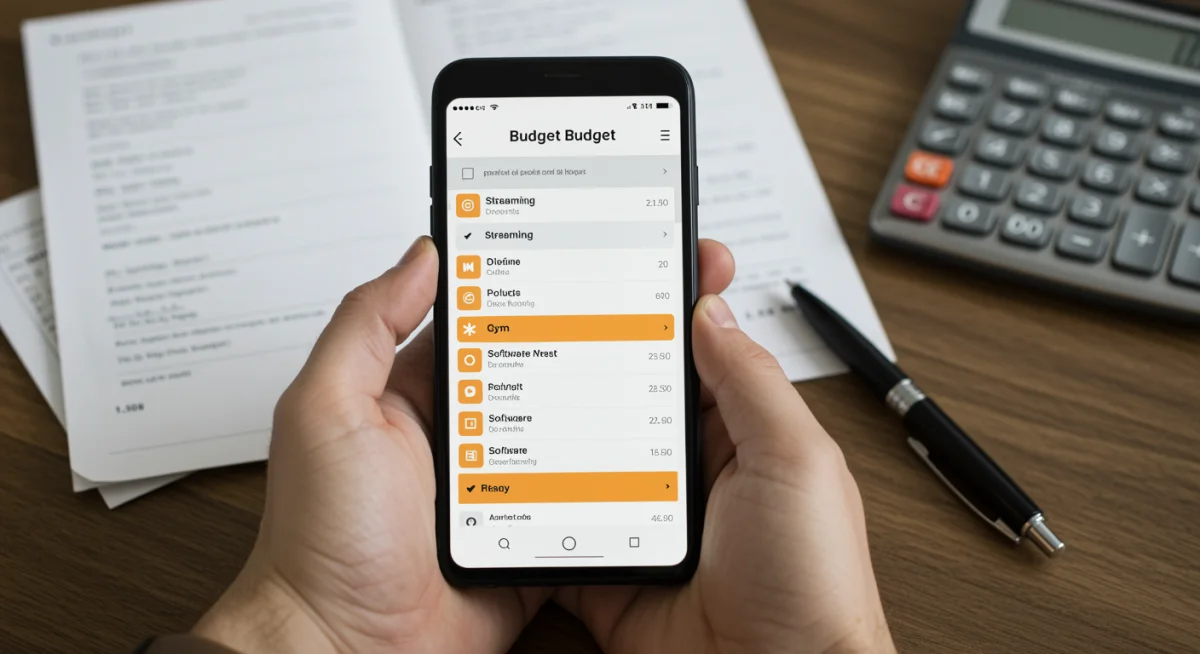
A simple spreadsheet can be your most powerful tool during this phase. List every subscription service, its monthly or annual cost, the renewal date, and a brief description of what the service provides. This visual aid will help you organize the information and make informed decisions.
Service Name: Clearly identify each subscription (e.g., Netflix, Spotify, Gym Membership).
Monthly/Annual Cost: Note the exact amount and frequency of the payment.
Renewal Date: Keep track of when each service is set to renew.
Purpose/Usage: Briefly describe what the service is for and how often you use it.
This comprehensive list serves as your baseline. It’s often surprising to see just how many subscriptions one accumulates over time. This initial shock can be a powerful motivator for the subsequent steps of the challenge.
The goal of Month 1 is not to make any immediate cuts, but rather to gain complete visibility. By the end of this month, you should have a clear, itemized list of all your recurring expenses, laying the groundwork for strategic decisions in the months to come. This thorough inventory is essential to effectively optimize subscription services.
Month 2: Evaluation and Prioritization
With a comprehensive list in hand, Month 2 shifts focus to evaluating each subscription’s value and prioritizing based on your actual usage and needs. This is where you begin to make tough but necessary decisions. Ask yourself critical questions about each service to determine if it truly aligns with your current lifestyle and financial goals.
Consider the frequency of use, the unique benefits it offers, and whether a free or cheaper alternative could suffice. This evaluation phase is not about deprivation; it’s about mindful consumption and ensuring every dollar spent brings genuine value. It’s a proactive approach to optimize subscription services rather than letting them optimize your wallet.
Assessing Value and Usage
Go through your spreadsheet item by item and assign a value rating. This can be a simple scale (e.g., high, medium, low) or a more detailed score. The key is to be honest about how much you actually use and benefit from each service.
High Value: Services you use frequently and cannot easily replace (e.g., essential work software, primary streaming service).
Medium Value: Services you use occasionally or could potentially live without, or find cheaper alternatives for.
Low Value: Services you rarely or never use, or those that have become redundant.
Don’t be afraid to be critical. That fitness app you subscribed to in January but haven’t opened since February? That streaming service you only used for one show? These are prime candidates for re-evaluation.
Prioritizing also involves comparing similar services. Do you need three different streaming platforms if you only regularly watch content on one? Can you consolidate your news subscriptions? This thoughtful assessment forms the core of your savings strategy.
By the end of Month 2, you should have a clear understanding of which subscriptions are essential, which are negotiable, and which are completely unnecessary. This structured evaluation is vital for successfully navigating the 3-month challenge and achieving your target savings.
Month 3: Action and Optimization Strategies
The final month of the challenge is all about taking decisive action. Based on your evaluations from Month 2, you’ll implement strategies to either eliminate, downgrade, or negotiate your subscription services. This is where the rubber meets the road, and you start seeing tangible results in your monthly spending.
Remember, the goal is to cut $50-$100 from your monthly expenses, and often, a combination of small adjustments across several services can achieve this. Don’t underestimate the power of seemingly minor changes; they add up quickly over time. This month is about smart execution to optimize subscription services effectively.
Implementing Your Savings Plan
There are several powerful strategies you can employ:
Cancellation: For low-value or unused services, outright cancellation is the most straightforward option. Many services allow you to cancel directly through their website or app.
Downgrading Plans: If you use a service but are on a premium plan you don’t fully utilize, consider downgrading to a basic or ad-supported version.
Negotiation: Don’t be afraid to call customer service for services like internet, cable, or even some software subscriptions. Ask about lower rates, promotional deals, or loyalty discounts. Sometimes, simply expressing your intent to cancel can prompt them to offer a better deal.
Bundling: Check if any of your essential services can be bundled together for a discount (e.g., internet and streaming packages).
Annual Payments: If you’re committed to a service, paying annually instead of monthly often results in a significant discount over the year. Ensure you have the funds available and factor this into your budget.
Beyond these direct actions, consider rotating your subscriptions. Instead of subscribing to all your streaming services simultaneously, activate one for a month or two, then cancel and switch to another. This allows you to enjoy a variety of content without paying for everything at once.
Document every change you make in your spreadsheet, noting the new monthly cost and your projected savings. This will help you track your progress towards the $50-$100 goal. This active management is key to successfully optimize subscription services and maintain financial discipline.
Achieving your $50-$100 monthly savings goal is a significant accomplishment, but the challenge doesn’t end there. Maintaining an optimized budget requires ongoing vigilance and regular check-ups. The subscription landscape is constantly evolving, with new services emerging and your needs changing over time. Think of this as an ongoing financial hygiene practice.
Establishing habits now will ensure that your hard-earned savings continue well beyond the initial three months. This proactive approach prevents ‘subscription creep,’ where new charges slowly accumulate and erode your financial progress. Regular reviews are essential to truly optimize subscription services for the long term.
Establishing Regular Review Habits
Schedule quarterly or semi-annual reviews of your subscriptions. Mark these dates in your calendar. During these reviews, repeat the discovery and evaluation steps on a smaller scale, ensuring that all current subscriptions remain relevant and cost-effective.
Calendar Reminders: Set recurring alerts to prompt your subscription reviews.
Automated Tracking Tools: Consider using budgeting apps or financial software that can help track recurring payments and alert you to changes.
Benefit Reassessment: Regularly ask yourself if each service still provides sufficient value for its cost.
Your life circumstances change, and so should your subscription portfolio. A service that was essential last year might be superfluous this year. Being flexible and willing to adjust means you’re always getting the most value for your money.
Furthermore, be cautious when signing up for new services. Before committing, ask if it’s truly necessary, what value it adds, and if you can get a free trial to assess its utility. This mindful approach to new subscriptions will help safeguard your optimized budget from future bloat, ensuring you continue to optimize subscription services effectively.
Leveraging Free Trials and Alternatives Wisely
Free trials can be a double-edged sword. While they offer a great way to test a service before committing, they often automatically convert to paid subscriptions if not canceled in time. Learning to leverage free trials wisely, alongside exploring genuinely free or more affordable alternatives, is a crucial skill for long-term savings.
This strategy involves being strategic about when you activate trials, how you track them, and being proactive about cancellation if the service doesn’t meet your expectations. It’s about smart consumption, not constant commitment, to optimize subscription services.
Strategies for Smart Trial Usage
To make free trials work for you, not against you:
Set Reminders: Immediately after signing up for a free trial, set a calendar reminder a day or two before it’s set to convert to a paid subscription.
Use a Separate Email/Card: Some people use a dedicated email address for trials or a virtual credit card with a spending limit to prevent accidental charges.
Immediate Cancellation: If you know you won’t continue the service, cancel it immediately after signing up, but often you can still use it for the remainder of the trial period. This prevents forgetting later.
Beyond trials, actively seek out free alternatives. Many open-source software options can replace paid versions, public libraries offer free access to digital content and streaming services, and numerous free fitness apps or online resources can substitute for paid gym memberships or personal trainers.
Exploring these alternatives not only saves money but can also introduce you to new, equally effective resources. The goal is to meet your needs without incurring unnecessary costs, continuously looking for ways to optimize subscription services for maximum financial benefit.
By mastering the art of smart trial usage and knowing when to opt for free alternatives, you add powerful tools to your financial toolkit. This mindful approach ensures you’re always getting the most value, preventing unnecessary expenses from creeping back into your budget.
The Psychological Aspect of Saving
Beyond the practical steps of identifying, evaluating, and cutting subscriptions, there’s a significant psychological component to successful saving. Our relationship with money and consumption habits plays a crucial role in how effectively we manage our finances. Understanding and addressing these psychological triggers can reinforce your commitment to the 3-month challenge and ensure lasting behavioral change.
Many subscriptions offer a sense of belonging, convenience, or even a perceived status. Letting go of them can sometimes feel like a loss. However, reframing these decisions as gains – gains in financial freedom, peace of mind, and the ability to pursue other goals – is key to long-term success when you optimize subscription services.
Overcoming Decision Fatigue and FOMO
The sheer volume of subscription options can lead to decision fatigue, making it easier to just keep everything rather than thoroughly review each one. Additionally, the fear of missing out (FOMO) on content or features can make canceling difficult.
Batch Processing: Instead of tackling all subscriptions at once, break down the review process into smaller, manageable chunks.
Focus on Value: Shift your mindset from what you might miss to what you gain in financial freedom and reduced stress.
Celebrate Small Wins: Acknowledge and celebrate each subscription you successfully cut or optimize. This positive reinforcement encourages continued effort.
Consider the cumulative effect of your savings. That $50-$100 per month can translate into $600-$1200 annually. What could you do with that extra money? Fund a vacation, contribute to an emergency fund, pay down debt, or invest in a personal development course. Visualizing these larger goals can be a powerful antidote to decision fatigue and FOMO.
By actively confronting the psychological barriers to saving, you strengthen your resolve and build healthier financial habits. This holistic approach ensures that your efforts to optimize subscription services are not just temporary fixes, but foundational changes for a more secure financial future.
Key Challenge Phase
Brief Description
Month 1: Discovery
Identify and list all recurring subscriptions to gain full visibility of expenses.
Month 2: Evaluation
Assess each service for value and usage to determine necessity and potential for cuts.
Month 3: Action
Implement cancellations, downgrades, or negotiations to achieve $50-$100 savings.
Ongoing Maintenance
Establish habits for regular review and smart trial usage to sustain savings.
Frequently Asked Questions About Subscription Optimization
How do I identify all my subscription services effectively?▼
Start by reviewing all bank statements, credit card bills, and digital payment histories (like PayPal) for the past 12 months. Look for recurring charges. Many banks also offer tools to categorize spending, which can highlight subscriptions. Don’t forget services billed directly to your phone or app store accounts.
What if I’m afraid of missing out on content or services?▼
Focus on the value you gain from saving money. Consider rotating subscriptions, activating one streaming service for a month, then canceling and switching to another. This allows you to enjoy various content without paying for everything simultaneously, effectively combating FOMO while optimizing your budget.
Can I really save $50-$100 per month just by optimizing subscriptions?▼
Absolutely. Many individuals unknowingly spend much more than they realize on dormant or underutilized subscriptions. By diligently identifying, evaluating, and taking action to cut or downgrade services, achieving $50-$100 in monthly savings is a very realistic and attainable goal for most households.
What are the best strategies for negotiating subscription prices?▼
Contact customer service, especially for internet, cable, or long-term software subscriptions. Politely inquire about loyalty discounts, promotional rates, or if there are cheaper plans available. Sometimes, expressing an intent to cancel can prompt better offers. Research competitor pricing beforehand to strengthen your negotiation.
How often should I review my subscription services after the challenge?▼
To maintain your optimized budget, it’s recommended to conduct a thorough review of your subscription services at least quarterly or semi-annually. This helps catch any new, unwanted charges and ensures your current services still align with your needs and provide adequate value for the cost.
Conclusion
Embarking on the 3-month challenge to optimize your subscription services is a powerful step towards greater financial control and significant monthly savings. By systematically identifying, evaluating, and strategically acting on your recurring expenses, you can realistically cut $50-$100 from your budget. This journey not only frees up valuable funds but also instills a greater sense of mindfulness about your spending habits, fostering long-term financial health. Remember, every dollar saved from an unnecessary subscription is a dollar you can put towards your true financial aspirations, making 2025 a year of smart savings and empowered choices.