Maximize 2025 Energy Tax Credits: Up to $3,200 Savings
Advertisements
Maximizing 2025 energy tax credits for home upgrades can lead to substantial savings, offering homeowners up to $3,200 by investing in energy-efficient improvements and renewable energy installations.
Are you looking to make your home more energy-efficient while simultaneously reducing your tax burden? The year 2025 presents an exceptional opportunity for homeowners in the United States to do just that. With a Smart Savings Alert: How to Maximize 2025 Tax Credits for Energy-Efficient Home Upgrades, Potentially Saving Up to $3,200, you could be on your way to significant financial relief and a more sustainable living space.
Advertisements
understanding the energy-efficient home improvement credit
The Energy-Efficient Home Improvement Credit, often referred to as the 25C tax credit, has been significantly bolstered by the Inflation Reduction Act (IRA) of 2022. This credit is designed to encourage homeowners to invest in a wide array of energy-saving improvements, making their homes more comfortable and reducing their carbon footprint. For 2025, the incentives are particularly attractive, offering a direct reduction in your tax liability rather than just a deduction.
Many homeowners are still unaware of the full scope of these credits, or how to properly claim them. It’s not just about installing solar panels; a multitude of smaller, yet impactful, upgrades can qualify. Understanding the nuances of what is covered, the limits, and the documentation required is crucial to successfully leveraging these valuable savings.
Advertisements
what upgrades qualify for the 25C credit?
The 25C credit covers a broad spectrum of home improvements aimed at enhancing energy efficiency. These upgrades include everything from better insulation to advanced heating and cooling systems. The intention is to make energy-efficient choices more accessible and affordable for the average American household.
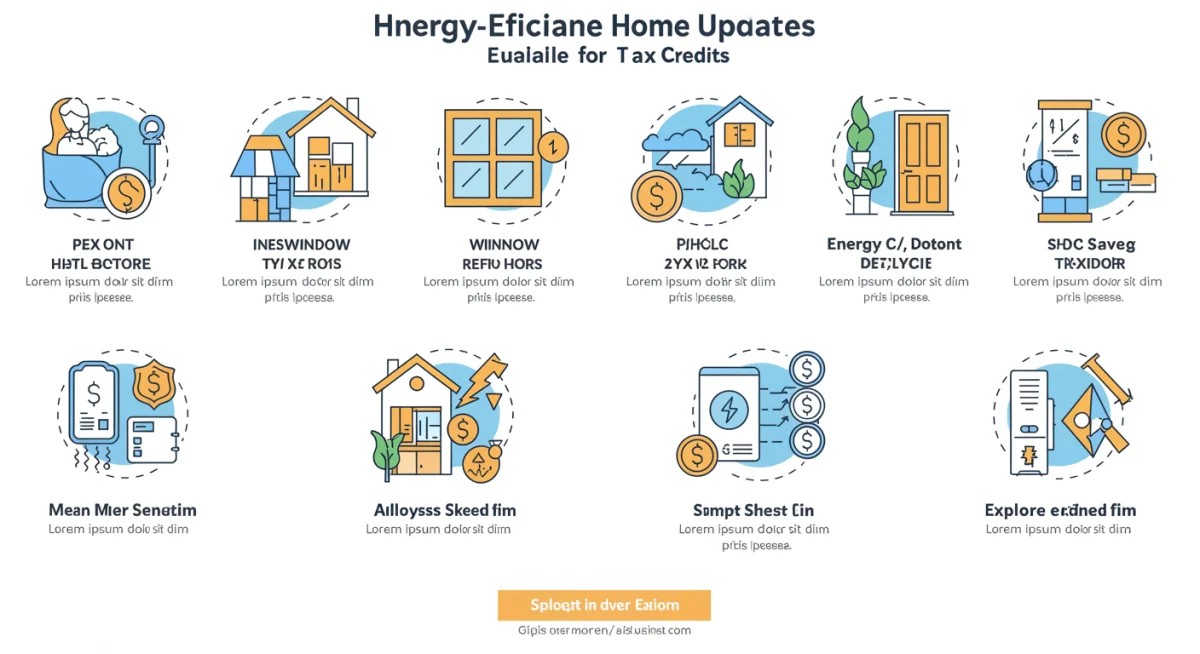
- Exterior Doors: Up to $250 per door, with an annual limit of $500.
- Exterior Windows and Skylights: Up to $600.
- Insulation and Air Sealing Materials: Up to $1,200.
- Home Energy Audits: Up to $150.
- Heat Pumps, Biomass Stoves, and Electric Panel Upgrades: Up to $2,000 for each, with an overall annual limit of $3,200 for all qualifying improvements under 25C.
It’s important to note that these are annual limits. This means if you spread your improvements over several years, you could potentially claim the credit multiple times. This flexibility allows homeowners to plan their upgrades strategically, maximizing their long-term savings and efficiency gains. Always keep detailed records of all purchases and installations for proper documentation.
navigating the residential clean energy credit (25D)
Beyond the 25C credit for general energy-efficient improvements, the Residential Clean Energy Credit, or 25D, offers even more substantial savings for homeowners who choose to install renewable energy systems. This credit is not capped at $3,200 annually like the 25C credit; instead, it provides a percentage of the cost of eligible property, making it a powerful incentive for larger investments.
The 25D credit is one of the most generous federal incentives available for homeowners, directly supporting the transition to cleaner energy sources. It reflects a strong governmental push towards widespread adoption of renewable energy technologies, acknowledging the upfront costs associated with these installations.
eligible clean energy technologies
The 25D credit applies to several key renewable energy technologies that can significantly reduce your home’s reliance on traditional energy sources. These systems not only cut down on utility bills but also contribute to a more sustainable environment.
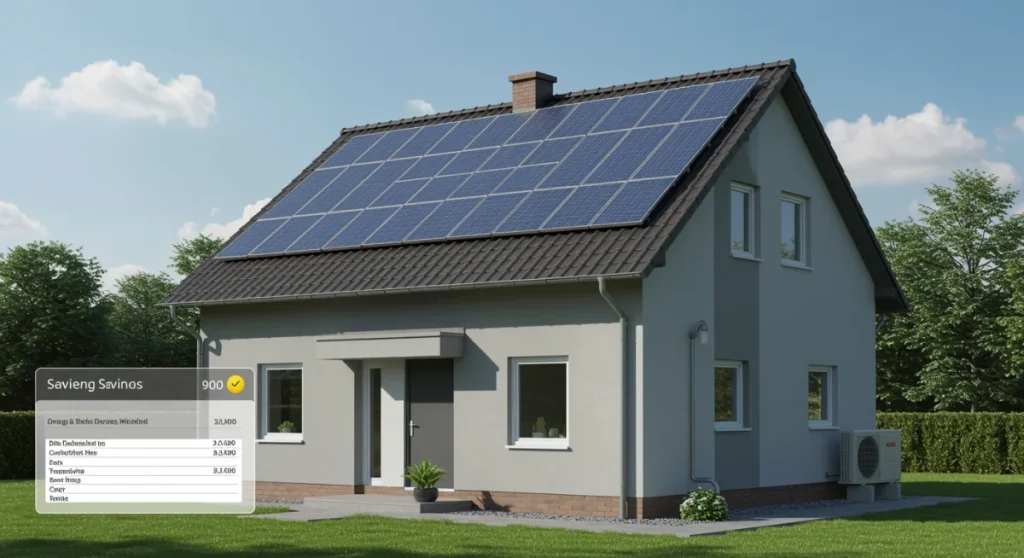
- Solar Electric Property (Solar Panels): Covers 30% of the cost, including installation.
- Solar Water Heating Property: Also covers 30% of the cost, provided the system is certified by the Solar Rating Certification Corporation or a comparable entity.
- Geothermal Heat Pumps: 30% of the cost, meeting Energy Star requirements.
- Small Wind Energy Property: Covers 30% of the cost.
- Battery Storage Technology: New for 2025, this also qualifies for 30% of the cost, provided the battery has a capacity of at least 3 kilowatt-hours.
Unlike the 25C credit, the 25D credit has no credit limit, except for fuel cell property. This means that a homeowner investing $30,000 in a solar panel system could receive a $9,000 tax credit. This substantial reduction can significantly offset the initial investment, making renewable energy solutions more attainable for many households. Remember to consult with a tax professional to ensure all criteria are met and to understand how these credits interact with other potential state or local incentives.
understanding the annual and lifetime limits
While the prospect of saving up to $3,200 is exciting, it’s crucial to grasp the specific limitations and how different credits interact. The Inflation Reduction Act has simplified some aspects while introducing new caps that homeowners need to be aware of to maximize their benefits in 2025.
Many homeowners mistakenly believe these credits are a one-time deal or have a single, overarching limit. However, the structure of the 25C and 25D credits allows for strategic planning over multiple years, potentially yielding greater overall savings if upgrades are phased correctly.
annual limits for the 25C credit
For the Energy-Efficient Home Improvement Credit (25C), there is an aggregate annual limit of $3,200. This means that no matter how many qualifying improvements you make in a single year, your total credit for those specific items cannot exceed $3,200. However, this limit is not a lifetime cap.
- Overall Annual Limit: $3,200 for all eligible 25C improvements.
- Specific Item Limits: Certain items have individual caps within the overall limit, such as $600 for windows/skylights and $2,000 for heat pumps.
- Annual Reset: The $3,200 limit resets each year, allowing homeowners to claim credits for new qualifying improvements in subsequent years. This encourages ongoing investment in energy efficiency.
This annual reset is a key feature. For example, if you install a new heat pump in 2025 and claim the $2,000 credit, you could install new windows in 2026 and claim up to $600 for those. This multi-year approach is vital for homeowners planning extensive renovations or those who wish to gradually upgrade their home’s energy performance. Always maintain meticulous records for each year’s claimed credits.
maximizing your savings: strategic planning for 2025
To truly maximize your savings using the 2025 tax credits, a strategic approach is essential. Simply making upgrades without understanding the interplay of the credits and their limits can lead to missed opportunities. A well-thought-out plan can ensure you capture every available dollar.
It’s not just about identifying eligible upgrades; it’s about timing your purchases and installations to align with the credit limits and your financial situation. Many homeowners overlook the benefit of combining different types of credits or spreading projects across tax years.
combining 25C and 25D credits
One of the most powerful strategies is to understand that the 25C and 25D credits operate independently. This means you can claim both in the same tax year, significantly increasing your potential savings. For instance, you could install a new heat pump (25C) and solar panels (25D) in the same year.
- Heat Pump (25C): Up to $2,000 credit.
- Solar Panels (25D): 30% of total cost, with no credit limit.
- Total Potential: A heat pump and a $20,000 solar installation could yield $2,000 + $6,000 = $8,000 in credits in a single year.
This combination strategy allows homeowners to undertake comprehensive energy overhauls, tackling both energy consumption efficiency and renewable energy generation. Planning these projects concurrently can also lead to efficiencies in installation and potentially reduce overall project costs. Always remember to keep separate, clear documentation for each type of credit claimed.
phasing projects over multiple years
Given the annual reset of the 25C credit, phasing your energy-efficient improvements over several years can be a smart move, especially for larger projects or multiple smaller ones. This prevents hitting the annual $3,200 cap prematurely and allows you to claim credits year after year.
Consider a scenario where you need new windows, insulation, and an electric panel upgrade. Instead of doing it all in one year and potentially exceeding the $3,200 limit for 25C, you could:
- Year 1: Install new insulation and exterior doors, claiming up to $1,200 + $500 = $1,700.
- Year 2: Replace old windows and upgrade your electrical panel, claiming up to $600 + $600 = $1,200.
This phased approach ensures that you maximize the credits for each type of improvement without being constrained by the annual aggregate limit. It also allows for better budgeting and less disruption to your household. Consulting with a tax advisor and an energy efficiency expert can help you create a tailored plan that optimizes both your energy savings and tax benefits.
documentation and claiming your credits
Claiming your energy tax credits successfully hinges on meticulous documentation and understanding the proper filing procedures. Without the right paperwork, even the most eligible improvements might not yield the desired tax relief. The IRS requires specific forms and records to validate your claims.
Many homeowners find the tax filing process daunting, but with a clear understanding of what information is needed, it becomes a straightforward task. Proper preparation not only ensures you receive your credits but also helps in case of an audit.
essential records to keep
For both the 25C and 25D credits, maintaining detailed records is paramount. These documents serve as proof of purchase, installation, and eligibility. Without them, your claim could be denied or delayed.
- Receipts and Invoices: Clearly showing the cost of qualifying property and installation.
- Manufacturer’s Certificates: For certain items, especially under 25C, a manufacturer’s certification statement confirming the product meets efficiency requirements is crucial.
- Proof of Installation Date: This confirms the year the improvement was placed in service, which dictates the tax year for claiming the credit.
- Contractor Information: Details of the contractor who performed the installation, including their license numbers, can be helpful.
It’s advisable to create a dedicated folder, either physical or digital, for all documents related to your energy-efficient upgrades. This centralized repository will make tax filing significantly easier and provide peace of mind. Keeping these records for at least three years after filing is a good practice, as recommended by the IRS.
filing form 5695
To claim these credits, you will need to file Form 5695, Residential Energy Credits, with your federal income tax return. This form is specifically designed to calculate and report your eligible energy-efficient home improvement and residential clean energy credits.

- Part II for 25C: This section is used to calculate the nonbusiness energy property credit (25C). You’ll report the costs of eligible improvements here, adhering to the annual limits.
- Part I for 25D: This section is for the residential clean energy credit (25D). Here, you’ll list the costs of renewable energy systems like solar panels or geothermal heat pumps.
- Carryforward Provisions: For the 25D credit, if the credit exceeds your tax liability for the year, you can carry forward the unused portion to future tax years, further extending your savings potential.
Carefully read the instructions for Form 5695, as they provide specific guidance on what can be claimed and how to calculate the credit amounts. If you use tax preparation software, it will typically guide you through the process, but having your documentation organized beforehand will streamline the experience. For complex situations, consulting a qualified tax professional is always recommended to ensure full compliance and maximum benefit.
beyond federal: state and local incentives
While federal tax credits offer substantial savings, savvy homeowners should also explore state and local incentives that can further sweeten the deal for energy-efficient home upgrades. These additional programs can stack on top of federal credits, creating an even more compelling financial argument for making sustainable choices.
The landscape of energy incentives is dynamic, with many states and municipalities offering their own unique programs. These can range from additional tax credits and rebates to low-interest loans for energy-efficient improvements. Neglecting to investigate these localized opportunities could mean leaving money on the table.
state tax credits and rebates
Many states offer their own versions of energy tax credits or rebates for specific energy-efficient products or renewable energy installations. These can vary widely by state, so it’s crucial to research what’s available in your specific area.
- State Energy Offices: Your state’s energy office or environmental department is an excellent first resource for information on state-specific programs.
- Utility Company Rebates: Many local utility companies offer rebates for upgrading to energy-efficient appliances, insulation, or HVAC systems. Check their websites or contact their customer service.
- Local Government Programs: Some cities and counties have their own initiatives, such as property tax abatements for solar installations or grants for low-income households to make energy improvements.
These state and local incentives often have their own application processes and eligibility requirements, which may differ from federal guidelines. It’s important to understand if they can be combined with federal credits, and if so, how. A comprehensive approach that considers all levels of government support will yield the greatest financial benefit for your energy-efficient home upgrades.
future-proofing your home: long-term benefits
Investing in energy-efficient home upgrades and renewable energy systems offers far more than just immediate tax credits and reduced utility bills. These improvements are a strategic move to future-proof your home, enhancing its value, comfort, and resilience in the face of changing energy landscapes and environmental concerns.
Beyond the tangible financial returns, there’s an undeniable benefit to living in a home that is more comfortable, quieter, and environmentally responsible. These qualitative advantages contribute significantly to overall homeowner satisfaction and quality of life.
increased home value and marketability
Energy-efficient homes are increasingly appealing to potential buyers. Features like solar panels, new insulation, and high-efficiency windows are seen as valuable assets, leading to higher resale values and quicker sales. Buyers are often willing to pay a premium for homes that promise lower operating costs and a reduced environmental footprint.
- Appraisal Value: Energy-efficient upgrades can positively influence home appraisals, reflecting the long-term savings and improved performance.
- Buyer Demand: As energy costs rise and environmental awareness grows, demand for eco-friendly homes is on an upward trend.
- Competitive Edge: In a competitive housing market, an energy-efficient home stands out, attracting more serious offers.
By investing in these upgrades now, you’re not just saving on taxes and energy bills; you’re making a smart investment in your property’s future. The initial outlay, often cushioned by tax credits, translates into a more valuable and desirable asset. This foresight positions your home favorably for years to come, offering both financial and environmental returns.
| Key Point | Brief Description |
|---|---|
| 25C Credit (Annual) | Up to $3,200 annually for energy-efficient home improvements like insulation, windows, and heat pumps. Resets each year. |
| 25D Credit (No Cap) | 30% of costs for renewable energy systems (solar, geothermal, wind, battery storage). No annual credit limit. |
| Strategic Planning | Combine 25C and 25D credits or phase projects over years to maximize total savings and avoid annual caps. |
| Documentation Required | Keep detailed receipts, invoices, and manufacturer certificates, and file Form 5695 with your tax return. |
frequently asked questions about 2025 energy tax credits
The 25C credit covers general energy-efficient home upgrades with an annual limit of $3,200, such as insulation or new windows. The 25D credit applies to renewable energy installations like solar panels, offering 30% of the cost with no credit limit.
Yes, you can claim both the 25C and 25D credits in the same tax year. They operate independently, allowing you to maximize savings by combining eligible energy-efficient improvements with renewable energy installations.
Improvements like new exterior doors, windows, insulation, certain HVAC systems (e.g., heat pumps), and electric panel upgrades qualify. There are specific sub-limits for certain items within the overall $3,200 annual cap.
Yes, starting in 2025, battery storage technology with a capacity of at least 3 kilowatt-hours is eligible for the 30% Residential Clean Energy Credit (25D). This is a significant new incentive for energy independence.
You’ll need to keep detailed receipts, invoices, and manufacturer certificates for all qualifying purchases and installations. These documents are crucial for accurately completing and filing Form 5695 with your federal tax return.
conclusion
The 2025 energy tax credits present an extraordinary opportunity for U.S. homeowners to invest in their properties while simultaneously achieving substantial financial savings. By understanding the nuances of the 25C and 25D credits, strategically planning your home improvements, and maintaining meticulous documentation, you can effectively reduce your tax liability and enhance your home’s energy efficiency. Beyond the immediate financial benefits of up to $3,200 or more, these upgrades contribute to a more sustainable future, increase your home’s value, and improve daily comfort. Don’t miss out on this chance to make smart savings and a positive impact on your living environment.
Related Posts: