Federal Programs 2025: $2,500 for First-Time Homebuyers
First-time homebuyers can secure up to $2,500 through various federal programs in 2025, designed to make homeownership more accessible and affordable for eligible individuals and families across the United States.
Por: adminwp2 em 28 de outubro de 2025
Última atualização em: 5 de dezembro de 2025
Advertisements
First-time homebuyers can secure up to $2,500 through various federal programs in 2025, designed to make homeownership more accessible and affordable for eligible individuals and families across the United States.
Are you dreaming of owning your first home but feel overwhelmed by the financial hurdles? Great news awaits! In 2025, a range of federal homebuyer assistance 2025 programs are poised to offer significant support, including grants of up to $2,500 specifically for first-time homebuyers. These initiatives aim to transform the dream of homeownership into a tangible reality for countless Americans.
Advertisements
Understanding federal homebuyer assistance in 2025
The landscape of homeownership can often appear daunting, particularly for those navigating it for the very first time. Fortunately, the U.S. government, through various agencies, consistently rolls out and maintains programs designed to alleviate some of the financial burdens associated with purchasing a home. In 2025, these federal initiatives continue to be a cornerstone for aspiring homeowners, offering not just financial aid but also educational resources and counseling.
These programs are not merely about providing funds; they are about fostering sustainable homeownership. They recognize that a stable home environment contributes significantly to individual well-being and community development. The assistance often comes in various forms, including grants, low-interest loans, and down payment assistance, each tailored to address different aspects of the homebuying process.
Advertisements
The purpose of federal programs
Federal homebuyer assistance programs are fundamentally established to address market imperfections and promote equitable access to housing. They target specific populations or address particular financial barriers that might otherwise prevent individuals from achieving homeownership. This includes helping with upfront costs like down payments and closing costs, which are often the most significant hurdles.
Stimulating the economy: Home sales and related industries contribute significantly to economic growth.
Promoting stability: Homeownership is often linked to greater community involvement and personal financial stability.
Addressing affordability: Bridging the gap between housing costs and what many first-time buyers can realistically afford.
While specific criteria can vary by program, most federal homebuyer assistance initiatives share common eligibility requirements. Typically, you must be a first-time homebuyer, which usually means you haven’t owned a home in the last three years. Income limits are also a common factor, ensuring that aid is directed towards those who need it most. Credit score requirements, while present, are often more flexible than conventional loans.
It is crucial for prospective applicants to meticulously review the specific guidelines for each program they consider. Eligibility can also depend on the property type, its location, and whether it will serve as the applicant’s primary residence. Understanding these nuances early on can save considerable time and effort during the application process.
In essence, federal homebuyer assistance in 2025 represents a critical lifeline for many Americans. These programs are designed with the dual purpose of supporting individual aspirations for homeownership and strengthening the broader housing market. By providing financial incentives and educational support, the government aims to create a more inclusive and accessible path to owning a home.
Key federal programs offering up to $2,500
When considering federal homebuyer assistance in 2025, several key programs stand out for their potential to offer significant support, including grants of up to $2,500. These programs are primarily managed by agencies such as the Federal Housing Administration (FHA) and the U.S. Department of Agriculture (USDA), among others. Each program has unique characteristics, but all share the common goal of making homeownership more attainable.
It’s important to differentiate between direct grants and assistance that comes in the form of reduced interest rates or favorable loan terms, though both ultimately contribute to making homeownership more affordable. The $2,500 figure often refers to specific grants for closing costs or down payment assistance, which can be a game-changer for many first-time buyers.
FHA loans: A popular choice
FHA loans are insured by the Federal Housing Administration, making them a popular option for first-time homebuyers due to their more lenient credit requirements and lower down payment options compared to conventional loans. While the FHA itself doesn’t directly provide the $2,500 grant, FHA-approved lenders often pair FHA loans with state or local down payment assistance programs that can offer such grants.
Lower down payment: Often as low as 3.5% of the purchase price.
Flexible credit scores: More accessible for individuals with less-than-perfect credit.
Combined with grants: Frequently used in conjunction with local or state grants for closing costs or down payment.
The FHA’s role is to reduce the risk for lenders, encouraging them to offer more favorable terms to a broader range of borrowers. This indirect support is vital, as it opens doors to other forms of assistance that can directly provide the $2,500 or more.
USDA Rural Development loans
For those looking to purchase a home in eligible rural areas, USDA Rural Development loans are an exceptional resource. These loans, specifically the Single Family Housing Guaranteed Loan Program, often require no down payment for qualified applicants. While the USDA doesn’t typically provide a direct $2,500 cash grant, the savings from not needing a down payment can far exceed this amount, effectively providing a much larger financial benefit.
The definition of ‘rural’ for USDA purposes is broader than many might expect, encompassing many suburban areas outside major metropolitan centers. This program is particularly attractive for its zero down payment feature and competitive interest rates, making it highly impactful for eligible homebuyers.
VA loans for veterans and service members
While not strictly a first-time homebuyer program, VA loans are a significant federal benefit for eligible service members, veterans, and surviving spouses. These loans offer incredible advantages, including no down payment, no private mortgage insurance (PMI), and competitive interest rates. The financial relief provided by these benefits often far surpasses a $2,500 grant, making homeownership highly accessible for those who have served our country.
Many state and local programs also offer specific grants and assistance that can be layered with VA loans, further enhancing the financial support available. The benefits of a VA loan are substantial and represent one of the most powerful federal homebuyer assistance tools available.
Navigating these programs requires careful research and understanding of their specific requirements. However, the potential for significant financial relief, including grants up to $2,500, makes them an invaluable resource for anyone aspiring to homeownership in 2025.
Eligibility requirements and application process
Successfully navigating the path to federal homebuyer assistance in 2025 hinges on a thorough understanding of eligibility criteria and the application process. While each program has its unique set of rules, there are common threads that run through most federal initiatives. Being prepared with the right information and documentation can significantly streamline your journey towards securing assistance, including potential grants of up to $2,500.
It’s crucial to approach this stage with diligence, as even minor oversights can lead to delays or rejection. The goal is to present a clear and complete picture of your financial situation and your commitment to homeownership.
General eligibility criteria
Most federal homebuyer assistance programs are designed to help specific demographics or address certain financial barriers. The most common eligibility factors include:
First-time homebuyer status: Typically defined as not having owned a home in the last three years. Some exceptions may apply for displaced homemakers or those owning non-permanent structures.
Income limits: Programs often have income caps, which vary by location and household size, ensuring assistance reaches those within a specified income bracket.
Credit score requirements: While federal programs are generally more flexible than conventional loans, a minimum credit score is usually required.
Property requirements: The home must often be your primary residence and meet certain safety and quality standards.
Understanding these general guidelines is the first step. You’ll then need to delve into the specifics of each program you’re interested in.
The application journey
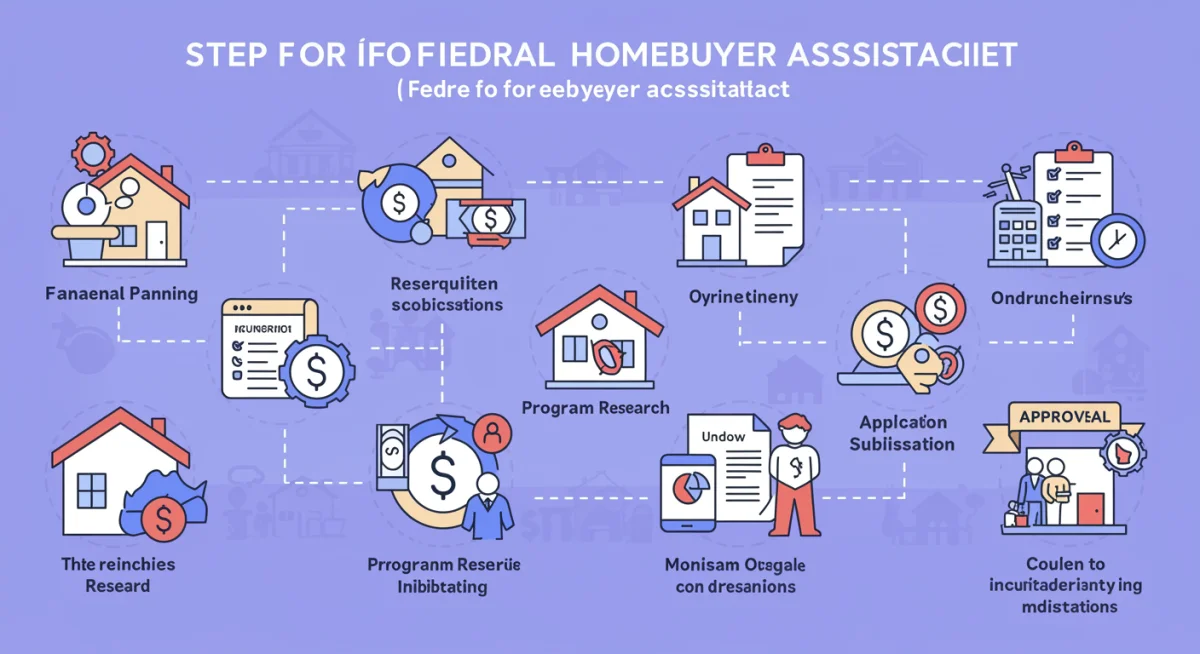
The application process for federal homebuyer assistance can seem complex, but breaking it down into manageable steps makes it more approachable. It typically involves several key stages, from initial research to final approval.
Research and identify programs: Start by identifying which federal, state, and local programs you might qualify for. Websites of HUD, FHA, USDA, and VA are excellent starting points.
Gather financial documentation: This includes pay stubs, tax returns, bank statements, and credit reports. Lenders will need a comprehensive view of your financial health.
Attend homebuyer education: Many programs require or highly recommend completing a homebuyer education course. These courses provide invaluable information on budgeting, maintaining a home, and understanding loan terms.
Connect with approved lenders: Federal programs often work with specific approved lenders. Finding one experienced in these programs can be highly beneficial.
Submit your application: Work closely with your lender to complete all necessary forms accurately and submit them in a timely manner.
Patience and persistence are key throughout this process. Don’t hesitate to ask questions and seek clarification from program administrators or your lender. The reward of securing your first home with financial assistance makes the effort worthwhile.
In summary, while the path to homeownership with federal assistance requires dedication, the clear guidelines and structured application process are designed to support aspiring homeowners every step of the way. By meeting eligibility criteria and diligently following the application stages, you can effectively leverage federal homebuyer assistance in 2025 to achieve your dream.
Maximizing your benefits: Beyond the $2,500 grant
While the prospect of securing up to $2,500 in federal homebuyer assistance in 2025 is undeniably appealing, it’s crucial to understand that this amount often represents just one component of a broader financial support system. Many first-time homebuyers can significantly maximize their benefits by strategically combining various federal, state, and local programs. The key lies in understanding how these different layers of assistance can work in conjunction to reduce overall homeownership costs.
Thinking beyond a single grant can unlock a myriad of opportunities, potentially saving you thousands of dollars in down payments, closing costs, and even long-term interest payments. A holistic approach to financial planning is essential here.
Layering assistance programs
One of the most effective strategies is to combine federal programs with state and local initiatives. For instance, an FHA loan might be paired with a state-sponsored down payment assistance program that offers a grant or a second mortgage with deferred payments. Many cities and counties also have their own specific programs for first-time homebuyers, often funded through federal block grants.
State Housing Finance Agencies (HFAs): These agencies often provide down payment and closing cost assistance programs, which can be combined with federal loans.
Local government programs: Many cities and counties offer specific grants or low-interest loans, sometimes targeting particular neighborhoods or professions.
Non-profit organizations: Some non-profits provide housing counseling and financial assistance, occasionally including grants.
It’s important to research what’s available in your specific area, as programs can vary widely by location. A local housing counselor can be an invaluable resource in identifying these opportunities.
Long-term savings and financial literacy
The true value of federal homebuyer assistance extends beyond the initial cash injection. Many programs emphasize financial literacy and responsible homeownership, which translate into long-term savings. Homebuyer education courses, often a requirement for assistance, equip buyers with the knowledge to make informed decisions about mortgages, property maintenance, and budgeting.
Understanding the nuances of your mortgage, including interest rates, loan terms, and escrow accounts, can lead to smarter financial choices over the life of your loan. Avoiding costly mistakes and managing your home effectively can result in savings far exceeding the initial grant amount. This focus on education is a testament to the government’s commitment to sustainable homeownership.
By taking a comprehensive approach to federal homebuyer assistance in 2025, first-time buyers can leverage not just the $2,500 grant but a whole ecosystem of support. This integrated strategy, combining various financial aids with robust financial education, paves the way for a more secure and affordable path to owning a home.
Common pitfalls and how to avoid them
While federal homebuyer assistance in 2025 offers incredible opportunities, navigating the process without encountering common pitfalls requires careful planning and awareness. Many first-time homebuyers, eager to secure their dream home, can sometimes overlook crucial details or make assumptions that lead to delays or even disqualification. Understanding these potential traps beforehand is key to a smooth and successful application process.
The excitement of homeownership can sometimes overshadow the meticulous nature of financial applications. However, a proactive and informed approach can save a lot of stress and ensure you fully benefit from the available assistance.
Misunderstanding eligibility criteria
One of the most frequent mistakes is not fully understanding the specific eligibility requirements for each program. Criteria can vary significantly between federal, state, and local initiatives. Forgetting that ‘first-time homebuyer’ often means not having owned a home in the past three years, or overlooking specific income limits for your area, can lead to wasted time and effort.
Income verification: Ensure all income sources are accurately reported and fall within program limits.
Credit score discrepancies: Be aware of your credit score and address any issues before applying.
Residency requirements: Confirm the property meets the primary residence stipulation if required.
Always read the fine print and, if unsure, seek clarification from a housing counselor or program administrator. A clear understanding of what’s expected will set you on the right track.
Incomplete or inaccurate documentation
The application process for federal homebuyer assistance is document-intensive. Providing incomplete, outdated, or inaccurate information is a surefire way to delay your application or have it rejected. Lenders and program administrators need a complete and truthful financial picture to assess your eligibility and risk.
Before you even start applying, dedicate time to gather all necessary documents, including recent pay stubs, tax returns from the past two years, bank statements, and any other financial records requested. Organize them meticulously. Double-check all dates and figures for accuracy. Remember, the goal is to make it as easy as possible for the reviewers to process your application.
Skipping homebuyer education
While some programs may not strictly mandate homebuyer education, opting out can be a significant oversight. These courses are designed to arm you with critical knowledge about the homebuying process, financial management, and the responsibilities of homeownership. Skipping them can leave you unprepared for the complexities of purchasing and maintaining a home, potentially leading to future financial strain.
Embracing homebuyer education is an investment in your future financial stability as a homeowner. It provides insights into budgeting, understanding mortgage terms, and even identifying predatory lending practices. This knowledge alone can be more valuable than the initial grant.
By being vigilant about eligibility, meticulous with documentation, and proactive with education, first-time homebuyers can effectively sidestep common pitfalls and leverage federal homebuyer assistance in 2025 to their maximum advantage, making their homeownership journey a successful one.
The future of homeownership assistance
As we look towards 2025 and beyond, the landscape of federal homebuyer assistance is continually evolving, reflecting shifts in economic conditions, housing market trends, and policy priorities. The goal remains consistent: to foster accessible and sustainable homeownership. However, the mechanisms and focus areas of these programs may adapt to better serve the needs of aspiring homeowners. Staying informed about these potential changes is crucial for anyone planning to utilize federal support.
Discussions around housing policy often center on making homeownership more equitable and affordable, especially in an era of rising housing costs. This forward-looking perspective suggests that federal programs will likely continue to play a vital role in the housing market.
Potential policy shifts and new initiatives
Government agencies and legislative bodies regularly review and update housing policies. In the coming years, we might see new initiatives emerge that address specific challenges, such as housing affordability in high-cost areas or support for particular demographics. There’s also an ongoing emphasis on making existing programs more efficient and easier to navigate for the public.
Increased focus on sustainability: Programs might increasingly incentivize energy-efficient homes or properties in resilient communities.
Technological integration: Digital platforms could streamline the application process, making information more accessible.
Targeted support: Continued or expanded assistance for essential workers, veterans, and underserved communities.
These potential shifts underscore the dynamic nature of federal assistance. Keeping an eye on government announcements and housing policy news can provide valuable insights into future opportunities.
The enduring importance of local and state partnerships
Federal programs rarely operate in isolation. Their effectiveness is often amplified through strong partnerships with state and local housing agencies. These collaborations allow for a more tailored approach, addressing regional housing needs and leveraging local resources. This integrated approach is likely to continue and possibly strengthen, ensuring that assistance is delivered efficiently and effectively at the community level.
Local housing authorities and non-profit organizations often act as crucial intermediaries, providing direct counseling, administering grants, and helping applicants navigate the complexities of combined federal and local aid. Their role in connecting individuals with federal homebuyer assistance in 2025 will remain indispensable.
In conclusion, while the core mission of federal homebuyer assistance in 2025 will persist, the specifics of programs and their delivery mechanisms are subject to change. Aspiring homeowners should remain proactive in their research, leverage available resources, and be prepared to adapt to evolving policies. The future promises continued support for homeownership, emphasizing both financial aid and educational empowerment.
Resources and next steps for first-time homebuyers
Embarking on the journey of homeownership, especially for the first time, can feel like a monumental task. Fortunately, a wealth of resources exists to guide you through every step, particularly when seeking federal homebuyer assistance in 2025. Knowing where to find reliable information and expert advice is paramount to successfully securing available grants and favorable loan terms, including the potential for up to $2,500 in direct aid.
The key to a smooth process is informed decision-making. Utilizing trusted resources can demystify the complexities of federal programs and empower you to make the best choices for your financial future.
Official government resources
The most authoritative sources of information for federal homebuyer assistance are government websites. These platforms provide detailed breakdowns of programs, eligibility criteria, and often include tools to find approved lenders or housing counselors.
U.S. Department of Housing and Urban Development (HUD): HUD.gov is a comprehensive portal for housing-related information, including links to FHA loans, housing counseling agencies, and state-specific resources.
Federal Housing Administration (FHA): The FHA website (part of HUD) offers specifics on FHA-insured mortgages and how to find FHA-approved lenders.
U.S. Department of Agriculture (USDA) Rural Development: RuralDevelopment.usda.gov provides details on rural housing programs, including their popular no-down-payment loans.
U.S. Department of Veterans Affairs (VA): VA.gov is the go-to source for information on VA home loans and other benefits for service members and veterans.
These websites are regularly updated and offer the most accurate information directly from the source. They also often provide contact information for further assistance.
The role of housing counselors
HUD-approved housing counseling agencies are invaluable resources for first-time homebuyers. These non-profit organizations offer free or low-cost advice on a wide range of topics, from financial readiness to navigating the closing process. A counselor can help you:
Assess your financial situation and readiness for homeownership.
Identify federal, state, and local programs you qualify for.
Understand the pros and cons of different loan types.
Prepare for the homebuying process, including required documentation.
Avoid predatory lending practices.
Finding a local HUD-approved counselor through HUD’s website is a highly recommended first step. Their unbiased guidance can save you time, money, and stress.
Your personalized action plan
Armed with information and expert advice, your next step is to create a personalized action plan. This involves:
Budgeting: Determine what you can realistically afford for a mortgage payment and other homeownership costs.
Credit repair: If necessary, take steps to improve your credit score to qualify for better loan terms.
Saving: Even with assistance, having some savings for unexpected costs is always wise.
Pre-approval: Get pre-approved for a mortgage to understand your borrowing power and show sellers you’re a serious buyer.
By diligently following these steps and leveraging the comprehensive resources available, first-time homebuyers in 2025 can confidently pursue their goal of homeownership, potentially benefiting from federal grants and support up to $2,500 and beyond.
Key Program
Brief Description
FHA Loans
Government-insured loans with low down payments and flexible credit, often combined with grants.
USDA Rural Development
Zero down payment loans for eligible rural properties, making homeownership highly accessible.
VA Loans
No down payment, no PMI loans for veterans and service members, offering significant savings.
Homebuyer Education
Mandatory or recommended courses providing crucial financial literacy for sustainable homeownership.
Frequently asked questions about federal homebuyer assistance
What exactly is a “first-time homebuyer” for federal programs?▼
A “first-time homebuyer” typically refers to an individual who has not owned a home in the last three years. This definition can sometimes include single parents who only owned a home with a former spouse or individuals who owned a non-permanent residence.
How do federal programs offer up to $2,500 in assistance?▼
The $2,500 assistance often comes through grants or down payment assistance programs, which are frequently offered by state or local housing agencies. These programs can be layered with federal loans like FHA, USDA, or VA loans, providing direct financial aid for closing costs or down payments.
Are there income limits for federal homebuyer assistance in 2025?▼
Yes, most federal programs, including those that offer grants, have income limits. These limits vary based on the specific program, your household size, and the median income of the area where you plan to purchase a home. It’s crucial to check the specific program guidelines.
Can I combine federal assistance with state or local programs?▼
Absolutely. Combining federal programs with state and local initiatives is a highly recommended strategy. Many state housing finance agencies and local governments offer grants or second mortgages that can be used in conjunction with federal loans to maximize your financial benefits and reduce out-of-pocket expenses.
Where can I find reliable information on these programs?▼
The most reliable sources are official government websites such as HUD.gov, FHA.gov, RuralDevelopment.usda.gov, and VA.gov. Additionally, HUD-approved housing counseling agencies offer free or low-cost advice and can help you navigate the various programs available.
Conclusion
The prospect of homeownership in 2025 is more accessible than ever, thanks to a robust framework of federal programs designed to support first-time homebuyers. With potential assistance reaching up to $2,500 in grants, coupled with favorable loan terms and extensive educational resources, the path to owning a home is well-lit for those willing to engage with these opportunities. By understanding eligibility, meticulously navigating the application process, and strategically combining various forms of aid, aspiring homeowners can transform their dreams into reality. The journey requires diligence and informed decision-making, but the rewards of securing a stable future in your own home are immeasurable. Don’t let the complexities deter you; leverage these powerful federal initiatives to unlock your homeownership potential.