Smart Home Gadgets for Energy Efficiency: 15% Savings in 2025
The 5 Must-Have Smart Home Gadgets for Energy Efficiency in 2025: A 15% Savings Guide highlights essential devices that empower homeowners to significantly reduce energy consumption and save on utility costs through intelligent automation and real-time monitoring.
Por: adminwp2 em 26 de agosto de 2025
Última atualização em: 5 de dezembro de 2025
Advertisements
The 5 Must-Have Smart Home Gadgets for Energy Efficiency in 2025: A 15% Savings Guide outlines how integrating intelligent devices like smart thermostats and energy monitors can lead to substantial reductions in household energy consumption and utility expenses.
Are you ready to transform your living space into a hub of innovation and savings? As we look towards 2025, the integration of technology into our homes offers unprecedented opportunities to reduce our environmental footprint and significantly cut down on utility bills. This guide focuses on The 5 Must-Have Smart Home Gadgets for Energy Efficiency in 2025: A 15% Savings Guide, providing actionable insights into how these devices can help you achieve remarkable energy savings.
Advertisements
The Rise of Smart Home Energy Management
The concept of a smart home has evolved far beyond mere convenience; it’s now synonymous with sustainable living and financial prudence. Homeowners in the United States are increasingly seeking solutions that not only simplify daily routines but also contribute to a greener planet and a healthier wallet. The advancements in artificial intelligence, machine learning, and interconnected device ecosystems have made energy management more intuitive and effective than ever before.
Understanding the impact of our energy consumption is the first step toward reducing it. Smart home technology provides the tools to monitor, analyze, and optimize energy usage across various appliances and systems. This granular control allows for precise adjustments, eliminating waste and ensuring that energy is only consumed when and where it’s truly needed. The promise of a 15% savings isn’t just a marketing claim; it’s an achievable goal with the right smart home setup.
Advertisements
The Evolution of Energy-Saving Technology
From simple programmable thermostats to complex whole-home energy management systems, the journey of energy-saving technology has been remarkable. Early iterations required significant manual input and lacked the sophisticated data analysis capabilities we see today. Now, devices learn our habits, adapt to environmental changes, and communicate with each other to create a cohesive, energy-efficient ecosystem.
Historical Context: Tracing the progression from basic timers to AI-driven automation.
Current Landscape: The prevalence of interconnected devices and cloud-based platforms.
Future Projections: The potential for even greater integration and predictive energy management.
The shift towards smart energy management is not just about adopting new gadgets; it’s about embracing a new mindset. It’s about being proactive rather than reactive with our energy consumption, making informed decisions based on real-time data, and ultimately, taking control of our environmental impact and household budget. This section lays the groundwork for understanding why these five gadgets are set to be indispensable in 2025.
In conclusion, the evolution of smart home technology has paved the way for unprecedented energy management capabilities. As we head into 2025, the focus on sustainable living and cost reduction will only intensify, making smart energy solutions a necessity rather than a luxury. The following sections will delve into specific gadgets that exemplify this trend, offering tangible pathways to significant energy savings.
Smart Thermostats: The Brains of Your HVAC System
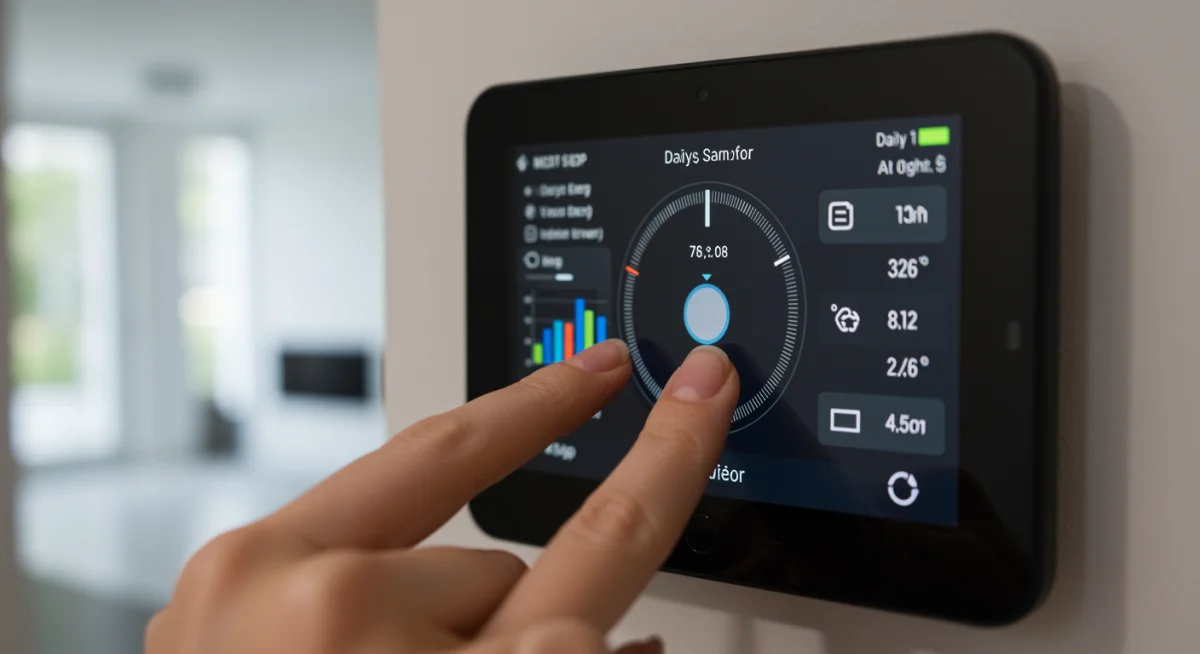
At the forefront of energy-efficient smart home gadgets are smart thermostats. These devices do more than just control your home’s temperature; they learn your preferences, adapt to your schedule, and optimize your HVAC system’s performance to minimize energy waste. By integrating with weather forecasts and occupancy sensors, they ensure your home is comfortable without overworking your heating and cooling units.
Traditional thermostats often lead to energy waste by maintaining constant temperatures regardless of whether anyone is home or if the outdoor conditions have changed. Smart thermostats overcome this limitation by providing dynamic control that responds to real-world variables. This intelligent approach can lead to substantial energy savings, often being the single most impactful smart home upgrade for reducing utility bills.
Smart thermostats offer a level of control and insight that traditional models simply cannot match. They empower homeowners to make data-driven decisions about their energy consumption, leading to a more efficient and comfortable living environment. The continuous learning algorithms improve over time, making the system even more optimized for your specific needs and habits.
Key Features and Benefits
Modern smart thermostats come packed with features designed to enhance comfort and maximize energy savings. These include remote access via smartphone apps, geofencing capabilities that adjust temperature based on your proximity to home, and detailed energy reports that help identify consumption patterns. Some models even integrate with voice assistants, offering hands-free control.
Learning Algorithms: Automatically adjust temperature based on learned habits.
Geofencing: Saves energy by turning down HVAC when you leave home and re-engaging when you return.
Remote Control: Adjust settings from anywhere using a smartphone app.
Energy Reporting: Provides insights into energy usage, helping identify areas for improvement.
The ability to monitor and control your HVAC system remotely is a game-changer for energy efficiency. Imagine leaving for vacation and realizing you forgot to adjust the thermostat; with a smart thermostat, a few taps on your phone can rectify the oversight, preventing unnecessary energy consumption. This level of convenience directly translates into tangible savings and peace of mind.
In summary, smart thermostats are an indispensable tool for anyone serious about reducing their home’s energy footprint. Their advanced features and ability to learn and adapt make them a cornerstone of any energy-efficient smart home system, offering a clear path to significant HVAC-related savings. Their impact on overall energy consumption is undeniable, making them a top contender for the number one spot in our guide.
Smart Lighting Systems: Illuminating Savings
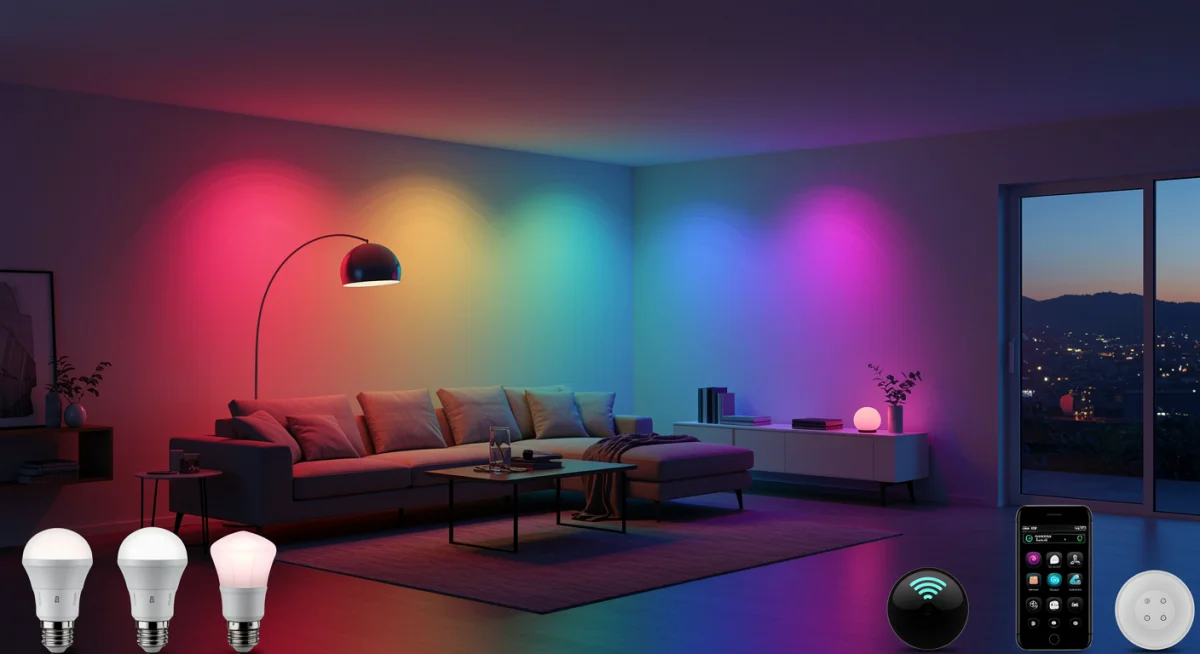
Lighting accounts for a significant portion of household electricity consumption, but with smart lighting systems, that’s rapidly changing. These systems replace traditional bulbs with energy-efficient LEDs and allow for precise control over brightness, color, and scheduling. Imagine lights that turn off automatically when a room is empty or dim themselves during peak sunlight hours, all contributing to substantial energy savings.
Beyond the obvious benefit of using less electricity, smart lighting also enhances the ambiance and functionality of your home. You can create custom lighting scenes for different activities, schedule lights to simulate occupancy while you’re away, and even integrate them with other smart home devices for a truly automated experience. The transition to smart lighting is not just about saving energy; it’s about upgrading your living environment.
LED Technology and Intelligent Control
The foundation of smart lighting’s energy efficiency lies in LED technology. LEDs consume significantly less power than incandescent or even CFL bulbs and have a much longer lifespan, reducing both energy bills and replacement costs. When combined with intelligent controls, their potential for savings is maximized.
Energy-Efficient LEDs: Consume up to 80% less energy than traditional bulbs.
Occupancy Sensors: Lights turn on and off based on presence in a room.
Daylight Harvesting: Automatically adjusts brightness based on natural light levels.
Scheduling and Scenes: Program lights to operate on a custom schedule or pre-set scenes.
The ability to control lighting remotely or through automated schedules means you never have to worry about leaving lights on unnecessarily. This not only saves energy but also extends the life of your bulbs. The convenience factor, coupled with the environmental and financial benefits, makes smart lighting a compelling addition to any energy-conscious home.
To conclude, smart lighting systems are a multifaceted solution for energy efficiency. By combining the inherent advantages of LED technology with intelligent automation and user-friendly controls, they offer a straightforward way to reduce electricity consumption and enhance your home’s atmosphere. Their widespread applicability across most homes makes them a critical component in achieving substantial energy savings.
Smart Plugs and Power Strips: Eliminating Phantom Load
Phantom load, also known as vampire power, refers to the electricity consumed by electronics when they are turned off but still plugged in. This seemingly minor drain can accumulate, accounting for a surprising percentage of a household’s total energy bill. Smart plugs and power strips offer a simple yet effective solution by cutting power to devices when they’re not in use, completely eliminating phantom load.
These unassuming gadgets are incredibly versatile, allowing you to turn almost any traditional appliance into a smart device. Whether it’s a coffee maker, a lamp, or a television, plugging it into a smart plug enables remote control, scheduling, and energy monitoring. This level of control empowers you to be more intentional about your energy consumption, preventing wasteful habits.
Monitoring and Automated Shut-off
Beyond simply turning devices on and off, many smart plugs and power strips offer detailed energy monitoring. This feature allows you to see exactly how much electricity each connected device is consuming, providing valuable data to identify the biggest energy hogs in your home. With this information, you can make informed decisions about usage patterns or even consider replacing inefficient appliances.
Remote Control: Turn devices on or off from anywhere via a smartphone app.
Scheduling: Set specific times for devices to power on or off.
Energy Monitoring: Track real-time and historical energy consumption of connected devices.
Voice Control Integration: Seamlessly integrate with popular voice assistants for hands-free operation.
The convenience of automating power to your devices is a significant advantage. Imagine having your phone charger automatically turn off once your phone is fully charged, or your entertainment system powering down completely when you leave for work. These small, consistent actions add up to considerable energy savings over time, making smart plugs a low-cost, high-impact investment.
In conclusion, smart plugs and power strips are essential for tackling the often-overlooked problem of phantom load. Their ability to provide remote control, scheduling, and energy monitoring for individual devices makes them an incredibly effective tool for optimizing energy consumption and achieving noticeable savings on your electricity bill. They are a foundational element for a truly energy-efficient smart home.
Smart Blinds and Shades: Harnessing Natural Light and Insulation
While often overlooked in energy discussions, windows play a crucial role in a home’s thermal performance. Smart blinds and shades offer an innovative way to manage natural light, reduce heat gain in the summer, and minimize heat loss in the winter, directly impacting the workload of your HVAC system. By automating their operation, these devices ensure optimal insulation and light harvesting throughout the day.
These intelligent window coverings can be programmed to adjust based on the time of day, outdoor temperature, or even the position of the sun. For instance, they can close during the hottest parts of the day to block solar heat gain, preventing your air conditioner from working overtime. Conversely, in winter, they can open during sunny hours to allow passive solar heating, then close at dusk to retain warmth.
The integration of smart blinds and shades into a comprehensive smart home system elevates energy efficiency to a new level. They work in concert with smart thermostats and lighting to create a dynamic environment that constantly optimizes for comfort and energy conservation. This holistic approach ensures that every aspect of your home contributes to the overarching goal of reducing energy consumption.
Automated Climate Control and Privacy
The primary energy-saving benefit of smart blinds and shades comes from their ability to automate climate control. By dynamically adjusting to environmental conditions, they act as a passive climate control mechanism, reducing the need for active heating and cooling. This automation also adds a layer of convenience and privacy, adjusting to your lifestyle without manual intervention.
Solar Heat Gain Management: Automatically adjust to block or allow sunlight based on temperature.
Improved Insulation: Add an extra layer of insulation, reducing heat transfer through windows.
Scheduling: Program opening and closing times to align with daily routines and sun patterns.
Integration: Connect with other smart home systems for cohesive environmental control.
The subtle yet significant impact of smart blinds on energy consumption makes them a valuable investment. They address a fundamental aspect of home energy efficiency – managing the relationship between indoor and outdoor climates through your windows. Their ability to adapt autonomously ensures consistent energy savings without requiring constant user input.
In conclusion, smart blinds and shades are a sophisticated solution for enhancing a home’s energy efficiency. By intelligently managing natural light and insulation, they significantly reduce the demand on HVAC systems, leading to tangible energy savings. Their seamless integration with other smart home devices makes them a powerful component in any comprehensive energy management strategy.
Whole-Home Energy Monitors: Unveiling Consumption Patterns
While individual smart gadgets help optimize specific aspects of your home’s energy use, a whole-home energy monitor provides a comprehensive overview of your entire electricity consumption. These devices connect to your electrical panel, giving you real-time data on how much power your home is using, identifying energy hogs, and helping you understand your overall consumption patterns. This level of insight is crucial for making informed decisions about energy usage.
Without a whole-home energy monitor, it’s often difficult to pinpoint exactly where your energy is going. You might know your bill is high, but not which appliances or behaviors are contributing the most. These monitors demystify your energy consumption, presenting data in an easy-to-understand format, often through a smartphone app, empowering you to take targeted action to reduce waste.
Real-time Data and Actionable Insights
The power of a whole-home energy monitor lies in its ability to provide immediate feedback. Seeing your energy consumption spike when a particular appliance turns on can be a powerful motivator for behavioral change. Many systems also offer historical data and comparative analysis, allowing you to track your progress and identify trends over time.
Real-time Monitoring: See your home’s electricity usage instantly.
Appliance-Level Breakdown: Identify which devices consume the most energy.
Historical Data: Track consumption trends and savings over weeks, months, or years.
Cost Estimation: Understand the financial impact of your energy usage in real-time.
The insights gained from a whole-home energy monitor are invaluable for anyone committed to deep energy savings. It transforms abstract numbers on a utility bill into concrete, understandable data that can guide your decisions. This empowers you to not only identify inefficiencies but also to celebrate your successes as you see your consumption decline.
In conclusion, a whole-home energy monitor is the ultimate tool for achieving comprehensive energy efficiency. By providing a clear, real-time picture of your electricity consumption, it enables you to identify waste, understand patterns, and make informed choices that lead to significant and sustained savings. It’s the analytical backbone of an truly optimized smart home.
Integrating for Maximum Savings: A Holistic Approach
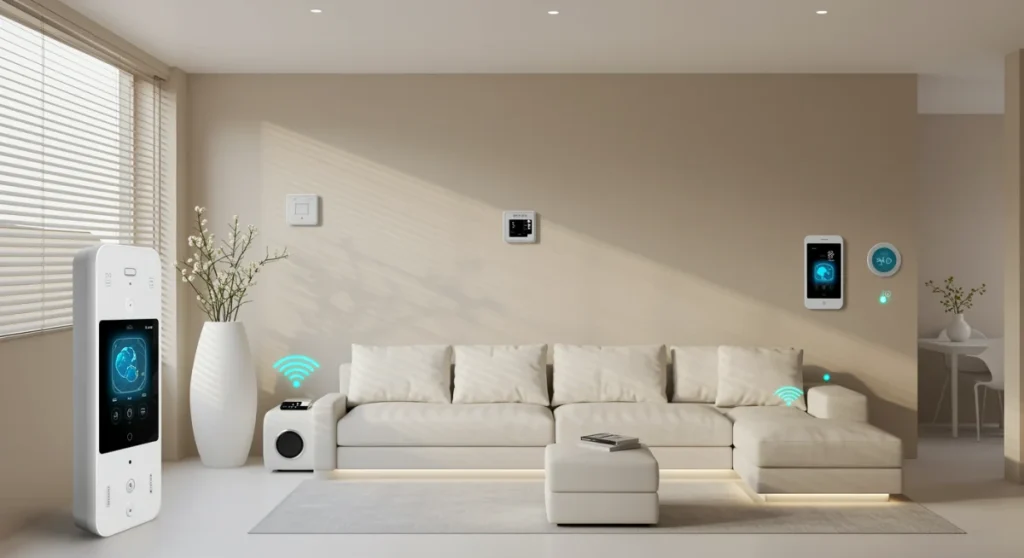
While each of the five smart home gadgets for energy efficiency offers individual benefits, their true power is unleashed when they work together as an integrated system. Imagine a scenario where your smart thermostat communicates with your smart blinds, adjusting them to maintain optimal indoor temperatures while your whole-home energy monitor tracks the impact of these coordinated efforts. This synergy is where the promised 15% savings truly become a reality.
A fragmented smart home, with devices operating in isolation, will yield some savings, but a cohesive ecosystem maximizes efficiency. Platforms like Apple HomeKit, Google Home, and Amazon Alexa provide the framework for these devices to communicate and automate tasks based on complex rules and routines. This interconnectedness streamlines energy management, making it effortless for the homeowner.
Building Your Smart Energy Ecosystem
Starting with one or two key devices and gradually expanding your smart home ecosystem is a practical approach. As you add more devices, consider their compatibility with your existing smart home hub or platform. The goal is to create a seamless network where devices can trigger actions in response to changes detected by other devices, optimizing energy use around the clock.
Centralized Hub: A single platform (e.g., Google Home, Amazon Alexa) to control all devices.
Inter-device Communication: Devices trigger actions in response to others (e.g., thermostat tells blinds to close).
Custom Routines: Create personalized automation schedules for energy-saving scenarios.
Scalability: Expand your system over time, adding more devices as needed.
The beauty of an integrated smart home for energy efficiency is its ability to adapt and learn. As your habits change or as new technologies emerge, your system can evolve with you, continuously finding new ways to save energy. This adaptive quality ensures that your investment in smart home technology continues to pay dividends for years to come.
In conclusion, the path to maximum energy savings lies in the intelligent integration of smart home gadgets. By fostering communication and collaboration among devices, homeowners can create a dynamic, self-optimizing ecosystem that not only reduces utility bills but also enhances comfort and convenience. This holistic approach is the ultimate strategy for achieving and exceeding the 15% energy savings goal.
Key Gadget
Primary Energy Benefit
Smart Thermostats
Optimizes HVAC usage based on learning and occupancy.
Smart Lighting
Reduces electricity with LEDs and automated control.
Smart Plugs
Eliminates phantom load for plugged-in devices.
Energy Monitors
Provides actionable insights into whole-home consumption.
Frequently Asked Questions About Smart Home Energy Efficiency
How much can I realistically save with smart home gadgets?▼
While a 15% savings is a conservative estimate, many homeowners report saving between 10% to 25% on their utility bills. Actual savings depend on your current energy habits, the specific gadgets installed, and how effectively they are integrated and utilized within your home.
Are smart home gadgets difficult to install and set up?▼
Most smart home gadgets are designed for easy DIY installation and setup, often guided by user-friendly apps. Some devices, like whole-home energy monitors, might require basic electrical knowledge or professional installation for safety and optimal performance.
Do smart home devices require a central hub to work?▼
While many devices can function independently, a central hub or platform (like Google Home or Amazon Alexa) is highly recommended for seamless integration, advanced automation, and maximizing energy savings across your entire smart home ecosystem.
What is ‘phantom load’ and how do smart plugs help?▼
Phantom load is the electricity consumed by electronics when they are turned off but still plugged in. Smart plugs eliminate this waste by completely cutting power to devices when they are not in use, either through scheduling or remote control.
Is the investment in smart home gadgets worth it for energy savings?▼
Absolutely. The initial investment in smart home gadgets is often recouped through significant long-term energy savings. Beyond financial benefits, they offer enhanced convenience, comfort, and contribute to a more sustainable lifestyle, making them a worthwhile upgrade.
Conclusion
Embracing the future of home energy management is not just a trend; it’s a smart financial decision and a crucial step towards a more sustainable lifestyle. The 5 Must-Have Smart Home Gadgets for Energy Efficiency in 2025: A 15% Savings Guide highlights the transformative power of smart thermostats, lighting systems, plugs, blinds, and whole-home energy monitors. By strategically integrating these devices, homeowners in the United States can achieve substantial reductions in utility costs, often surpassing the initial 15% savings target. The journey to a smarter, more energy-efficient home is accessible and rewarding, promising both environmental benefits and a healthier bottom line. Investing in these technologies today means investing in a more sustainable and economically sound future for your home.